
Autumn Convention
The Cheshire BKA are proud to present their:
Autumn Convention & Annual Honey Show
Sunday 11th October 2026
9:30am to 4:00pm
Honey Show exhibits staged between 8.30 and 9.30. See Honey Show Schedule for more details
at
Cranage Hall Hotel, CW4 8EW
On-line Honey Show entries HERE
Programme:
8.30am – 9:30 am Staging of Honey Show exhibits
9.30 am Reception with Coffee & Biscuits
9.50 Welcome from Cheshire BKA Chair Pete Sutcliffe
10.00 The John Van Suchtelen Memorial Lecture:
Lesley Jacques NDB
Hive hygiene – clean bees are happy bees
Presentation of examination certificates
11.15 Refreshments
11.45 The Bob Parsonage Memorial Lecture
Dr Stephen Fleming
The magic and mystery of Drone Congregation Areas
13.00: Lunch
14.15 The Francis Graham Smith Memorial Lecture
Professor Robert Pickard
Brains in Honey Bees and Humans
15.30 Refreshments and Raffle Draw
15.45 Presentation of Cups & Honey Judges’ Comments
Visit Honey Exhibits
16.15 Removal of Exhibits
Click HERE to book tickets
Grand Raffle with fantastic prizes
2 – course lunch
Refreshments
Book stall & Equipment stall
Please Note: All past winners of trophies are requested to return them on or prior to the show in a clean condition
Speaker Profiles:
Dr Stephen Fleming
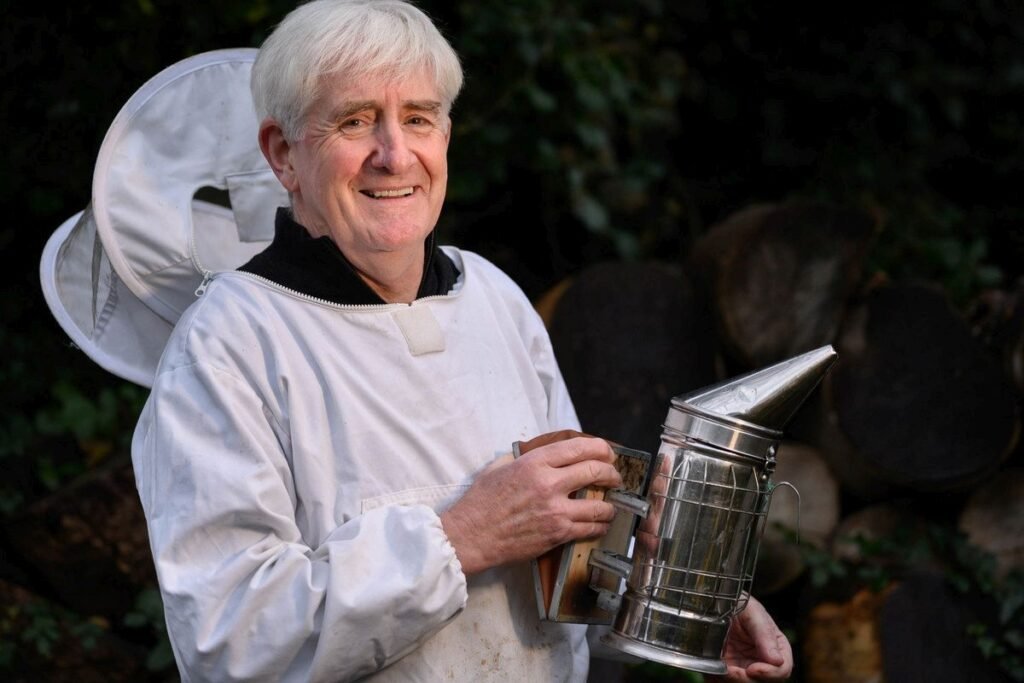
Stephen Fleming is co-editor of BeeCraft and started keeping bees just as the varroa mite was beginning to take a toll on Britain’s bees. With a lifelong interest in the environment, he enjoys the multi-faceted aspects of beekeeping and bees that take him into new, diverse and fascinating arenas. Among his specific honey bee interests are island beekeeping, drone congregation areas, Vespa velutina (the Asian hornet) and observation hives.
“The magic and mystery of drone congregation areas”
Fascinated by the idea that male honey bees gather in particular places in the hope of meeting up with a queen, Stephen Fleming set about trying to find these drone congregation areas (DCAs).
The books led him in one direction, but the drones lured him in another, and on his first outing, he was lucky to find one where he least expected. Since then, he has upset many a working afternoon by taking time off in the drone season to try to unravel the secrets of DCAs. Each season, the drones keep springing surprises – just as the mystery seems close to being explained, more questions surface. As the mysteries multiply, the magic is constant.
Stephen will speak of his methods and experiences in the south of England with a special reference to the Isles of Scilly, where each year a small team embarks on the Game of Drones to try to discover if drones are prepared to fly over water to neighbouring islands in search of a mate.
Lesley Jacques NDB
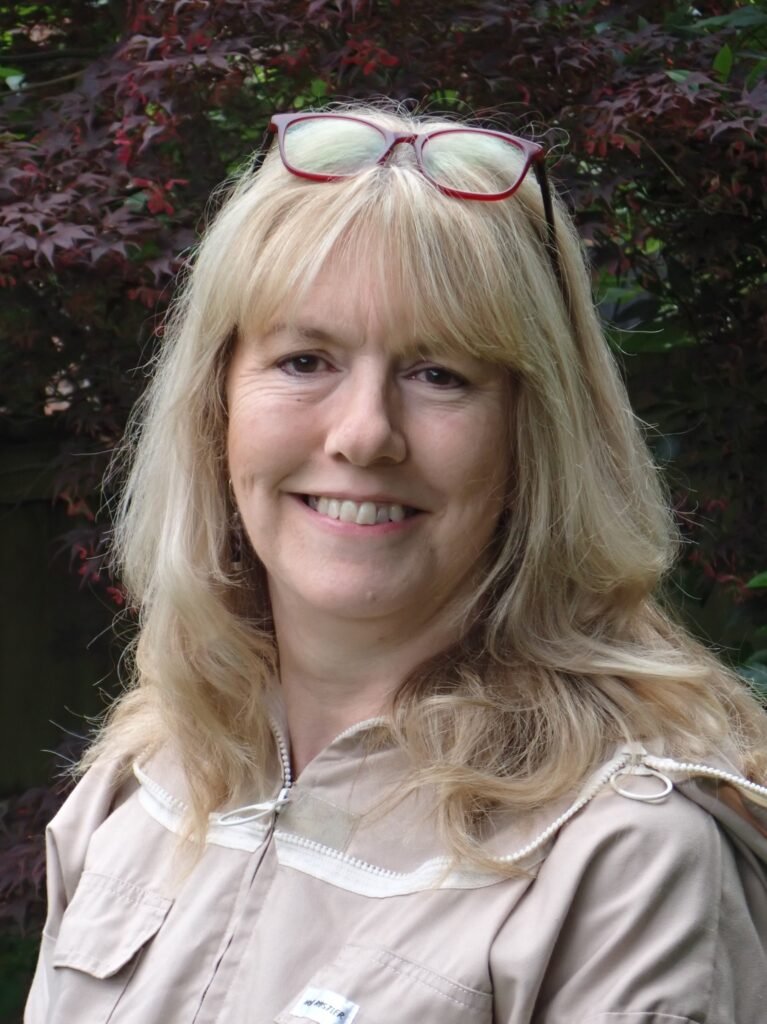
Lesley became an accidental beekeeper after a swarm arrived in her garden in 2011. She very quickly became fascinated by the bees she was tending, and committed to learn more about them, working her way through the BBKA Module and Husbandry exams. She was awarded her Master Beekeeper qualification in 2022 and gained the NDB in 2024. Lesley is Vice Chair of Cheshire Beekeepers’ Association as well as being a founder member of Mid Cheshire Beekeepers. Lesley is an examiner for the Basic, Honey bee Health and General Husbandry assessments and is actively engaged with the Association’s advanced and beginners’ level teaching programmes, typically providing introductions for entry-level beekeepers, tuition and mentoring for the Basic examination and structured teaching for the Module exams. As a scientist by profession, she takes a particular interest in the biology and botanical aspects of beekeeping, and in conveying this to others. Lesley lives in Cheshire with her husband Tony, and manages five apiaries with more colonies than she admits to.
“Hive hygiene – clean bees are happy bees”
Hygienic colony management is an essential part of beekeeping, and something that should be an integral part of our regular inspections and manipulations. But why is it so important? In this presentation we will look at the transmission pathways for honey bee pathogens and those measures that we can take to safeguard the health and wellbeing of not only our own colonies, but those of neighbouring beekeepers and feral colonies. Comb changes are a key part of this, along with equipment hygiene and elements of good practice. Ultimately, a simple seasonal hygiene plan can help to keep us on track, ensuring that our colonies are healthy, happy and in the best shape to thrive.
Professor Robert Pickard
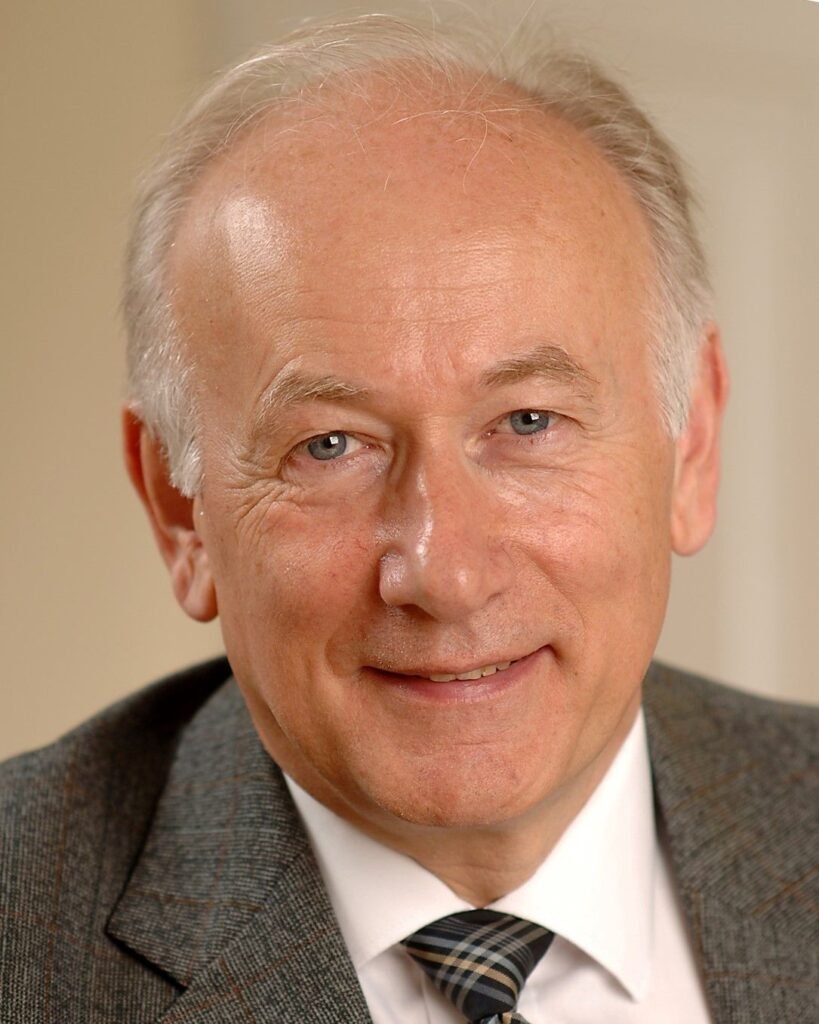
Robert Pickard is Emeritus Professor of Neurobiology at the University of Cardiff. He has held too many posts to list here, but, in the beekeeping world, he is Patron of the Welsh Beekeepers Association, President of the Central Association of Beekeepers and Editor Emeritus of the Journal of Apicultural Research. His research concerns the interfacing of solid state microelectronics with brains and tumours and his team, at Cardiff, was the first to implant microchips into the heads of honeybees and cultivate human brain cancer cells on the surface of microchips. In 1985, the first computerised atlas of the honeybee brain was illustrated at The Royal Society, in London, and the World Beekeeping Congress, in Nagoya.
Formerly, Robert was Head of the Bee Research Unit in Cardiff for 25 years and his students kept bees in more than 50 different countries around the world. The slide-rule that he invented for beekeepers in 1978 is still in use. He is an Honorary Life Member of many organisations concerned with beekeeping and public health, including the WBKA and The British Dietetic Association. He was a founding member of the Association for Nutrition and an independent member of the Parliamentary and Scientific Committee.
“Brains in Honey Bees and Humans”
This talk illustrates why and how brains have evolved and how they work. The honeybee brain contains two ‘mushroom bodies’ which are responsible for the bee’s incredible performance. If we understood all the details of these bodies, we would be in a much better position to understand the physical and chemical nature of human thought. Mental illness and dementia are not ethereal conditions. They are a consequence of physical and chemical changes in the brain, which is a machine, albeit an amazing machine that took Nature 2,500 million years of experimentation and development to produce. Honeybees have short- and long-term memories. They communicate through sound, antennal tapping, body language and pheromones. Their perceptual and cognitive capabilities are remarkable. They can calculate to solve problems and they can be trained to perform tasks. They are the only species, apart from humans, that can communicate symbolic navigational instructions. Bee thoughts are generated in the same way as our own thoughts. Can we determine what a bee is thinking ?